Leave Your Message

2026 Best 48V 150Ah LiFePO4 Battery for Global Buyers?

Choosing the 2026 best 48V 150Ah LiFePO4 battery requires more than comparing prices and advertised cycle counts. Global buyers need dependable energy storage for solar systems, backup power, marine equipment, and mobile applications. This guide examines real-world performance, usable capacity, safety controls, warranty terms, and supplier reliability. It also addresses the search phrase “48vot 150amp Lifepo4,” which reflects a common typing variation among international customers.

A quality battery should deliver stable output under practical loads, not only in laboratory conditions. At 48 volts and 150 amp-hours, the nominal energy is about 7.2 kWh. Usable energy will vary with the battery management system, discharge limit, temperature, and inverter efficiency. Buyers should check continuous and peak current ratings carefully. A battery may look powerful on paper. Its terminals, cables, and cooling design still matter.

Reliable evaluation also includes transport packaging, technical documentation, and after-sales support. Confirm certifications for the destination market, because requirements differ across regions. Ask for test reports, cell specifications, communication protocols, and warranty exclusions. Do not trust impressive claims without evidence. No battery is perfect. Even LiFePO4 technology needs correct charging, suitable storage, and professional installation. Some product pages remain vague, and that deserves closer questioning. This overview will help readers compare leading options with practical judgment, while recognizing that the cheapest battery may create higher costs later.
2026 Best 48V 150Ah LiFePO4 Battery for Global Buyers?

What Is a 48V 150Ah LiFePO4 Battery?

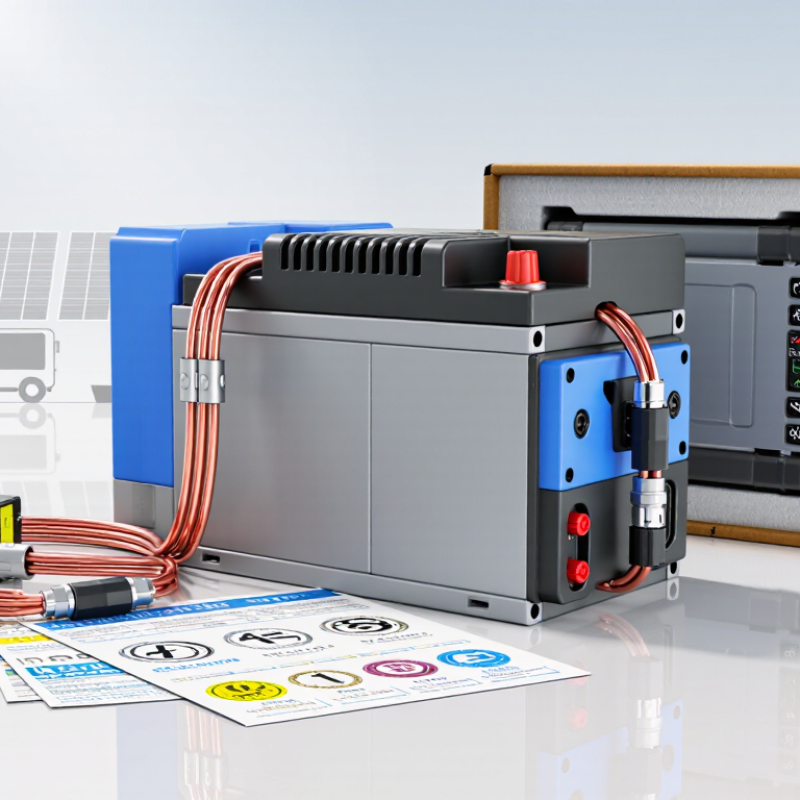
A 48V 150Ah LiFePO4 battery is a rechargeable energy-storage unit using lithium iron phosphate cells. Its nominal voltage is often 51.2V, although the market commonly calls it 48V. Multiplying voltage by capacity gives about 7.68kWh of stored energy. The usable amount is lower. Depth of discharge, temperature, battery age, and inverter efficiency all affect real output.

The battery management system, or BMS, monitors cell voltage, current, and temperature. It can disconnect the pack during overcharge, excessive discharge, or overheating. In practical system checks, installers should match the battery with an inverter supporting the correct voltage range and charging profile. Cable size matters too. Undersized cables may become warm, waste energy, and create avoidable safety risks. A fuse or suitable disconnect device should protect the circuit.

LiFePO4 chemistry is valued for stable operation, long service life, and strong thermal resistance. It suits solar storage, backup power, mobile workstations, and selected off-grid systems. However, “long life” is not automatic. High charging currents, freezing temperatures, poor ventilation, and repeated deep discharges can reduce performance. A common weakness is confusing rated capacity with guaranteed daily energy. That assumption needs review. Buyers should verify continuous and peak output, usable capacity, BMS limits, enclosure rating, warranty terms, testing records, and installation instructions. The battery is only one part of the system.

2026 Best 48V 150Ah LiFePO4 Battery for Global Buyers? — What Is a 48V 150Ah LiFePO4 Battery?

A 48V 150Ah LiFePO4 battery typically has a nominal voltage of 51.2V and a rated capacity of 150Ah. Its theoretical energy capacity is calculated as 51.2V × 150Ah = 7.68kWh. The chart shows estimated usable energy at different discharge limits.

Usable energy depends on the selected depth of discharge, temperature, inverter efficiency, battery age, and load conditions. The values shown are theoretical estimates based on a 51.2V nominal voltage and a 150Ah rated capacity, before system losses.

How Does a 48V 150Ah LiFePO4 Battery Work?

A 48V 150Ah LiFePO4 battery usually contains sixteen 3.2V cells connected in series. Technically, this creates a 51.2V nominal pack, although the market calls it a 48V battery. Its rated energy is about 7.68kWh, calculated from 51.2V × 150Ah. During discharge, lithium ions move through the electrolyte toward the positive electrode. Electrons travel through the external circuit, powering an inverter, cabin system, or backup load. Charging reverses this movement.

The battery management system is the control center. It measures each cell’s voltage, pack current, and temperature. It can disconnect charging or loads when conditions become unsafe. Passive balancing also reduces cell voltage differences. A 0.5C discharge equals 75A, producing roughly 3.84kW at nominal voltage. Actual output depends on the inverter, wiring, temperature, and programmed limits. Usable energy is lower than 7.68kWh because reserve capacity and conversion losses remain.

The International Energy Agency reported that global battery-storage additions reached about 42GW in 2023, showing stronger demand for controllable energy. NREL’s storage cost analysis commonly models lithium-ion round-trip efficiency near 85% to 90%. Field results vary. A cold morning can reduce available capacity, and an undersized cable may create heat and voltage loss. That detail is easy to overlook. For buyers, checking the BMS current rating, operating temperature range, cycle-test method, and inverter compatibility matters more than reading “150Ah” alone.

Key Specifications and Performance Characteristics

2026 Best 48V 150Ah LiFePO4 Battery for Global Buyers?

A 48V 150Ah LiFePO4 battery stores about 7.68kWh at its nominal voltage. Actual usable energy depends on the battery management system and discharge limit. At 90% depth of discharge, usable capacity is near 6.9kWh. This suits solar backup, small commercial systems, and off-grid equipment.

Key specifications matter more than advertised capacity. Buyers should check continuous current, peak current, operating temperature, communication ports, and inverter compatibility. A 150A continuous output can support roughly 7.2kW at 48V, but thermal limits may reduce this figure. Charging below 0°C can damage lithium cells unless low-temperature protection is installed. That detail is often overlooked.

The U.S. Department of Energy reports typical lithium-ion round-trip efficiency near 85% to 95% in energy-storage applications. The International Energy Agency also recorded strong growth in global battery-storage deployment during 2023, showing wider demand for dependable cycling systems. However, laboratory cycle-life claims may exceed field results. Dust, heat, poor balancing, and repeated high-current charging can shorten service life. Buyers should request test conditions, warranty exclusions, safety documentation, and independent capacity results. A realistic design should also reserve energy for aging, because a new battery rarely performs identically after several years.

2026 Best 48V 150Ah LiFePO4 Battery for Global Buyers? - Key Specifications and Performance Characteristics
Specification Typical Value Performance or Buyer Relevance Verification Notes
Battery chemistry Lithium iron phosphate (LiFePO4) High thermal stability, long service life, and no cobalt or nickel in the cathode chemistry. Confirm the cell chemistry and safety documentation.
Nominal voltage 51.2 V Usually configured as 16 series-connected LiFePO4 cells and commonly marketed as a 48 V battery. Check compatibility with the inverter or charger DC input range.
Rated capacity 150 Ah at a specified test rate Determines the available charge storage and should be evaluated with the stated temperature and discharge current. Request a capacity test report and the applicable test standard.
Nominal energy 7.68 kWh Calculated as 51.2 V × 150 Ah; actual usable energy depends on the discharge limit, temperature, and load. Use usable-energy figures rather than nominal energy for system sizing.
Recommended depth of discharge Up to 80% for regular operation An 80% depth of discharge provides approximately 6.14 kWh before conversion losses. Follow the battery management system limits and the warranty conditions.
Charge voltage range Typically 56.8–58.4 V, depending on the charging profile A 16-series LiFePO4 pack reaches about 58.4 V at 3.65 V per cell. Use a charger specifically configured for LiFePO4 chemistry.
Discharge cutoff range Approximately 40.0–44.8 V, depending on the BMS settings Protects cells from over-discharge and helps preserve cycle life. Confirm the programmed cutoff voltage with the inverter supplier.
Recommended continuous charge current Up to 75 A, subject to the design specification A lower charging rate generally reduces heat and may improve long-term performance. Verify the exact current limit of the cells, BMS, cables, and terminals.
Recommended continuous discharge current 100 A for a common high-power configuration Provides approximately 5.12 kW of DC output at nominal voltage before inverter losses. Do not exceed the specified BMS and thermal limits.
Short-term peak discharge Often 150–200 A for 5–10 seconds Supports short motor-starting or inverter-surge events when the BMS permits it. Peak capability is highly design-dependent; request a tested pulse-current curve.
Cycle life Typically 4,000+ cycles to 80% remaining capacity Can support many years of daily cycling under controlled temperature and moderate current. Check the test depth of discharge, temperature, current, and end-of-life criterion.
Charge temperature 0°C to 45°C Charging below freezing can cause lithium plating unless the system includes suitable low-temperature protection or heating. Confirm whether the BMS blocks charging below 0°C.
Discharge temperature Typically −20°C to 55°C Cold temperatures reduce available power, while high temperatures accelerate aging. Ask for derating information at temperature extremes.
Integrated protection BMS with overcharge, over-discharge, overcurrent, short-circuit, and temperature protection Improves operational safety and keeps individual cells within their permitted voltage range. Confirm balancing method, alarm functions, and event-recording capability.
Communication options Optional CAN bus, RS485, or Bluetooth monitoring Enables state-of-charge, voltage, current, temperature, and alarm monitoring. Check protocol compatibility with the intended inverter or energy-management system.
Enclosure protection IP65 is common for suitable outdoor-rated designs Protection against dust ingress and water jets may support sheltered outdoor installation. The actual IP rating must be confirmed from the enclosure test report.
Approximate mass Approximately 65–80 kg Affects shipping cost, handling equipment, rack loading, and installation labor. Obtain the packed and unpacked weights for logistics planning.
Typical applications Solar storage, backup power, telecommunications, recreational vehicles, and off-grid systems Suitable for stationary and mobile energy storage when voltage, current, temperature, and mounting requirements are met. Review local electrical, transport, fire-safety, and installation requirements before purchase.

Safety, Lifespan, Charging, and Maintenance Requirements

A 48V 150Ah LiFePO4 battery stores about 7.2 kWh of nominal energy. The IEA’s Global EV Outlook 2024 reported that LFP chemistry exceeded 40% of global electric-vehicle battery demand in 2023. Its stability is attractive, but safer chemistry does not mean risk-free operation. Buyers should request independent testing against IEC 62619, UL 1973, and UN 38.3 transport requirements. A certified battery-management system should protect every cell from overcharge, deep discharge, overcurrent, and excessive temperature.

Charging needs careful matching. A 16-cell pack normally reaches approximately 58.4V at full charge, using a charger designed specifically for LiFePO4 chemistry. A 30A charger equals roughly 0.2C for this capacity and usually supports moderate thermal stress. Charging below 0°C can cause lithium plating, so a low-temperature cutoff is essential. Follow the supplier’s voltage limits, not a generic lead-acid profile. Small errors matter.

Maintenance is simple, but not optional. Inspect terminals every few months, keep connections dry, and watch for swelling, unusual heat, or sudden capacity loss. Store the battery near 40–60% state of charge in a cool, dry place. The U.S. Department of Energy notes that temperature strongly influences battery aging, although real-world lifespan depends on cycling depth, current, and storage conditions. Claims of 4,000–6,000 cycles should be treated as test-condition figures, not promises. Installation quality can quietly decide the outcome.

How Global Buyers Can Choose the Right Battery Supplier

For global buyers, a 48V 150Ah LiFePO4 battery is not selected by capacity alone. Supplier quality often decides performance, safety, and long-term cost. Ask for the cell specification, battery management system details, cycle-life test conditions, and continuous discharge rating. A serious supplier should explain whether testing occurred at 25°C, at a specific current, and under which cutoff voltage. Without these details, “6,000 cycles” means very little.

Experience matters during supplier evaluation. Request recent factory photos, sample test reports, production records, and references from similar applications. Check whether the supplier can provide recognized transport and product documents for your destination market. Confirm warranty terms in writing, including response times, replacement procedures, and exclusions. A low price may hide weak cells, limited technical support, or expensive returns. I have seen buyers focus on the battery quote and overlook connector changes, packaging, and import handling. That mistake can delay a project by weeks.

Tips: Compare at least three suppliers using the same specification sheet. Test one sample before placing a larger order. Measure voltage consistency, charging temperature, and communication functions. Ask how the battery performs in cold storage or hot containers. Confirm dimensions carefully; a few millimeters can disrupt an enclosure. Also, question unusually perfect claims. Reliable suppliers admit operating limits and explain known weaknesses. Their answers should be precise, documented, and easy to verify.