
- Home
- Company
- Products
- News
- FAQs
- Blog
- Contact
Leave Your Message
A 48 V 160 Amp Battery can look like a straightforward upgrade on a product page. In practice, the right choice depends on what “160 Amp” means. Buyers should confirm whether the rating is 160 amp-hours (Ah), then check usable energy, continuous discharge current, charging limits, and battery chemistry. A battery’s label is only the starting point.
Demand for dependable battery systems is growing. The International Energy Agency’s Global EV Outlook 2024 reports that electric car sales reached nearly 14 million in 2023, about 18% of new car sales worldwide. That figure does not measure demand for 48 V batteries specifically. It does show how quickly electrification is reshaping expectations for energy storage and power delivery. For buyers, details matter: a battery powering a cabin system or solar setup faces different loads from one supporting a motor or inverter. Check the manufacturer’s datasheet, not just the headline capacity. Compare the battery management system, low-temperature charging protection, cycle-life test conditions, warranty, and physical dimensions. A 160 Ah rating does not guarantee the same real-world runtime across brands. Small differences add up. This guide examines the specifications and trade-offs behind leading 48 V options for 2026. Some product claims can be difficult to compare fairly, and that deserves a closer look.
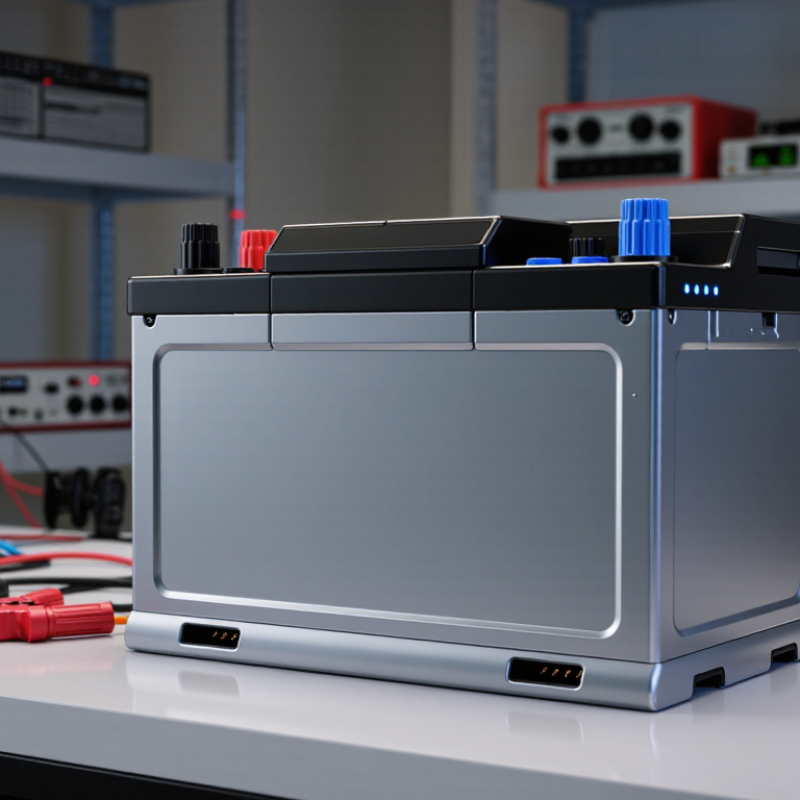
A 48 V 160 amp battery usually describes a battery system with a nominal voltage of 48 volts and a 160 amp-hour capacity. The wording is imperfect. “160 amp” may mean 160 Ah, not a 160-amp discharge rating. Buyers should check the technical label carefully.
Capacity describes stored energy. A 48 V, 160 Ah battery provides about 7.68 kWh under ideal conditions. Real usable energy is lower because temperature, load, aging, and the battery management system affect performance. Voltage also changes during charging and discharge, so 48 V is a nominal value, not a constant measurement.
Current ratings need separate attention. A battery may support 160 amps continuously, or only for a short peak period. These ratings depend on cell design, wiring, connectors, cooling, and protection settings. I would verify continuous current, peak duration, recommended charging current, and low-temperature limits before buying. A clamp meter can reveal actual load behavior during operation. Small details matter.
For example, a 160 Ah battery supplying 80 amps theoretically runs for two hours, but practical runtime may be shorter. In my experience, buyers often compare capacity while overlooking inverter efficiency and cable losses. That mistake is understandable, but it can distort expectations. Check the test conditions behind every claimed rating.
In battery listings, “160 amp” often means 160 amp-hours (Ah), a measure of capacity—not the maximum current the battery can deliver. The table below uses a common 16-cell LiFePO₄ configuration as an illustrative reference; actual specifications vary by battery design and manufacturer.
| Rating or buying factor | Typical reference value | What it means for buyers |
|---|---|---|
| Nominal voltage | 51.2 V for a 16-series LiFePO₄ pack | Often marketed as “48 V.” Confirm that the battery’s voltage range is compatible with the equipment. |
| Capacity | 160 Ah | Capacity describes stored charge. It is not the same as continuous or peak output current. |
| Nominal energy | About 8.19 kWh (51.2 V × 160 Ah) | This is the nominal energy calculation. Usable energy depends on the BMS settings, operating conditions, and permitted depth of discharge. |
| Charge voltage | Up to 58.4 V for a typical 16S LiFePO₄ charge profile | Use the charge voltage and charging profile specified for the particular battery; do not assume every 48 V battery uses the same settings. |
| Maximum charge current | Model-specific; check the battery label or datasheet | The permissible charging current is determined by the cells and BMS, not by the 160 Ah capacity alone. |
| Continuous discharge current | Model-specific; verify the rated continuous current | Check that the continuous rating supports the load. For example, 100 A at 51.2 V corresponds to about 5.12 kW before conversion losses. |
| Peak discharge current | Model-specific and usually time-limited | Confirm both the peak current and its permitted duration, especially for motor starts or inverter surge loads. |
| Battery management system (BMS) | Protection and current limits vary by model | Look for documented overvoltage, undervoltage, overcurrent, short-circuit, and temperature protections. |
| Operating temperature | Model-specific; charging limits may differ from discharging limits | Check the datasheet, particularly for cold-weather charging. Some batteries require low-temperature charge protection or external heating. |
| Compatibility checks | Voltage range, current limits, charger profile, and connection requirements | Confirm compatibility with the inverter, charger, wiring, fuse, and intended series or parallel arrangement before purchase. |
Buyer’s note: Compare batteries using their published nominal voltage, amp-hour capacity, energy, continuous and peak current limits, operating-temperature range, and warranty terms. Ratings and charging limits should be verified against the specific product datasheet.
It stores about 7.68 kWh nominally. At 80% depth of discharge, usable energy may approach 6.1 kWh. Conversion losses reduce it further.
Not necessarily. It may describe discharge current instead of capacity. Check whether the datasheet lists amps, amp-hours, or both. Labels can mislead.
Lithium iron phosphate offers strong thermal stability and long cycle potential. Nickel-based cells usually provide higher energy density. The better choice depends on space, load, and duty cycle.
Not always. The calculation suggests about 7.7 kW nominally. However, the battery management system may limit continuous output. Peak power is not sustained power.
Compare voltage range, continuous current, peak current, charging limits, and communication requirements. The charger’s profile must match the battery. A simple plug may not be enough.
Cold temperatures can reduce available power and charging ability. Low-temperature charge protection is valuable. My first estimate was too optimistic in winter conditions.
Treat capacity as a test result, not a guarantee. Ask whether it is nominal or usable. Test temperature, discharge rate, and cutoff settings can change the result.
Cell balancing, clear state-of-charge data, replaceable fuses, and accessible terminals help. Good details save time beside a cabinet. I still overlook small access problems.
Ask for documented testing under recognized battery safety procedures. Review cycle-life conditions and warranty exclusions. A polished specification sheet proves less than clear test evidence.
No. Compare usable energy, expected cycle life, safety features, and service conditions. Market prices change quickly. A cheap quotation may omit important limits.