Leave Your Message

2026 Top 51.2V 180Amp Battery for Global Buyers

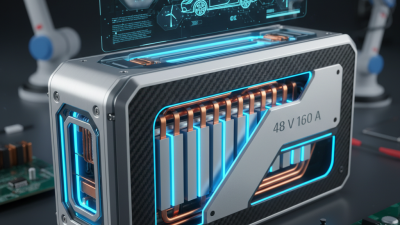
The 2026 market for the 51.2vot 180amp Battery is becoming more practical, demanding, and technically informed. Global buyers now compare usable energy, cycle life, charging speed, thermal control, and service support. They also examine whether a supplier can provide test reports, traceable cells, and clear warranty terms.

This article introduces the 51.2V battery class commonly paired with lithium iron phosphate chemistry. Its nominal voltage suits many residential storage, commercial backup, and low-speed mobility systems. However, “180 amp” can describe current output, while “180Ah” describes capacity. These terms are not interchangeable. That distinction matters.

Battery scientist Jeff Dahn has stated, “The lithium-ion battery is a very complicated device.” His comment remains relevant here. A large battery is not judged by capacity alone. Cell matching, battery-management software, enclosure design, temperature sensing, and installation quality shape real-world performance. A well-designed pack may deliver stable power beside a workshop wall, even during repeated evening loads. A poorly integrated system may lose efficiency, produce warnings, or age faster than expected.

This guide reviews key specifications for global buyers. It considers usable capacity, continuous and peak current, operating temperature, communication protocols, certifications, shipping preparation, and after-sales assistance. Regional requirements can differ. Buyers should verify local grid rules and qualified installation practices before purchase.

There is no perfect battery.

Some product claims also need closer inspection. A lower price may hide weaker cells, limited support, or unclear testing. Reliable decisions come from evidence, not impressive numbers alone.
2026 Top 51.2V 180Amp Battery for Global Buyers

Understanding the 51.2V 180Amp Battery and Its Core Specifications

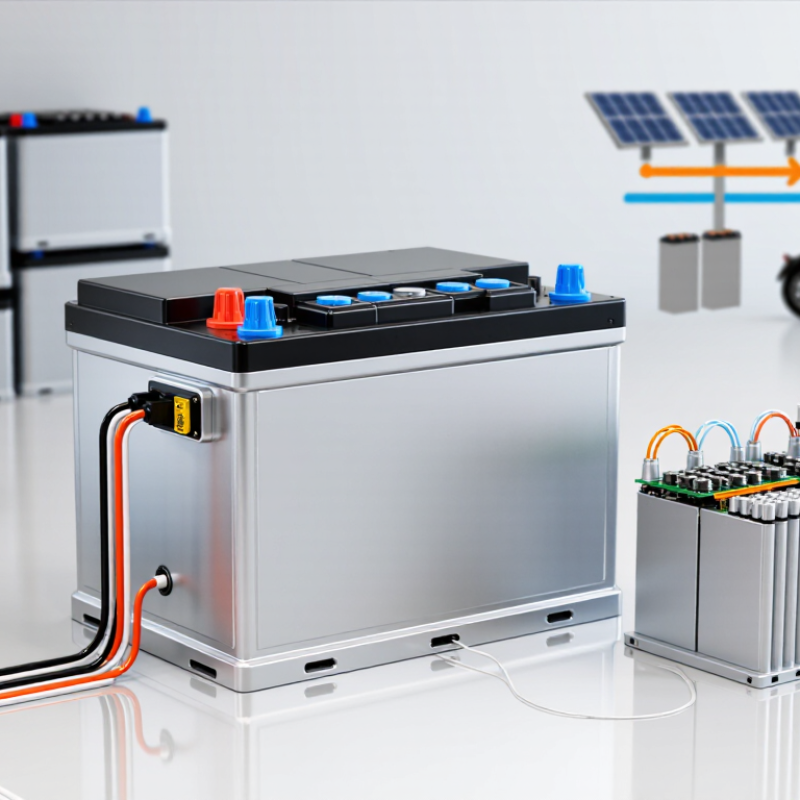
Understanding a 51.2V 180Amp Battery starts with correcting the terminology. In most product listings, “180Amp” means 180Ah, not 180A. A 51.2V, 180Ah lithium iron phosphate pack stores about 9.22kWh of nominal energy. This calculation uses voltage multiplied by capacity. Actual usable energy is lower because the battery management system protects cell life.

A typical pack uses 16 cells in series, with a nominal cell voltage near 3.2V. Its charging limit may approach 58.4V, while the low-voltage cutoff depends on the cell design and control settings. A 180A continuous output could theoretically deliver about 9.2kW at nominal voltage. That is not always practical. Heat, cable size, inverter efficiency, and battery temperature can reduce performance. The International Energy Agency reported continued battery cost declines in its Global EV Outlook 2024, but falling prices do not remove installation risks. NREL research also emphasizes thermal management and accurate state-of-charge estimation. I would not trust capacity labels alone.

Tips: Confirm whether the specification says 180Ah or 180A. Request test data at the stated discharge rate. Check cycle-life conditions, operating temperature, communication protocol, and enclosure rating. A 9kWh battery can weigh over 80 kilograms. Plan lifting and ventilation before delivery. Small details matter. Some published figures look precise, yet testing methods may differ.
Exploring Battery Chemistry, Structure, and Operating Principles

A 51.2V 180Ah battery stores approximately 9.2kWh under nominal conditions. Lithium iron phosphate chemistry is common for this format. Its stable crystal structure reduces thermal runaway risk compared with some nickel-rich chemistries. However, “safer” never means risk-free. Installation still needs correct fusing, ventilation, spacing, and certified protection.

The battery usually contains cylindrical or prismatic cells, connected into modules. A battery management system monitors voltage, temperature, current, and state of charge. It balances cells during charging and disconnects the circuit during dangerous conditions. At 180A continuous output, the battery could deliver about 9.2kW at nominal voltage. Real power depends on temperature, wiring losses, and the discharge limit. The number looks precise, but it is not the whole truth.

The International Energy Agency reported that global battery storage additions reached about 42GW in 2023, rising roughly 130% year on year. This growth reflects wider demand for solar shifting and backup power. IEC 62619 emphasizes protection against overcharge, overheating, and abnormal operation for industrial lithium batteries. Buyers should check cycle-life testing, usable capacity, peak current, and low-temperature charging limits. A label alone cannot prove performance. I would also question any lifetime claim without test conditions, depth of discharge, and ambient temperature.

Comparing Capacity, Power Output, Lifespan, and Efficiency

A 51.2V 180Ah battery provides about 9.2kWh of nominal energy. Real usable capacity is lower, often around 8.3–8.8kWh after reserve limits. At a full 180A discharge, theoretical output reaches approximately 9.2kW. The inverter and battery management system may reduce this figure. Check both continuous and peak ratings carefully.

Capacity alone does not show operating value. NREL’s battery storage cost and performance assessments commonly place lithium-based systems near 85–95% round-trip efficiency. Wiring, temperature, inverter losses, and aging affect actual results. In a practical test, a 90% round-trip system may return about 8.3kWh from 9.2kWh charged. Small losses become meaningful in daily cycling.

Lifespan depends strongly on depth of discharge and heat. Industry testing often reports 3,000–6,000 cycles for lithium iron phosphate systems under controlled conditions. At one cycle daily, that suggests roughly eight to sixteen years, but this estimate can be optimistic. The International Energy Agency’s 2024 battery analysis also highlights temperature control and manufacturing quality as major durability factors. Keep the battery below its rated temperature range. Performance data still needs local verification.

2026 Top 51.2V 180Ah Battery for Global Buyers

Capacity, power output, lifespan, and efficiency comparison based on a representative 51.2V 180Ah lithium iron phosphate battery profile.

Nominal capacity:
51.2V × 180Ah = 9.216kWh nominal energy.
Power output:
4.608kW at 0.5C and 9.216kW at 1C, assuming the battery supports the stated current.
Expected lifespan:
Approximately 5,000 full cycles to 80% retained capacity under controlled conditions.
Round-trip efficiency:
Approximately 95%, depending on temperature, charging rate, inverter losses, and operating conditions.

Reference values are engineering estimates for a typical 51.2V 180Ah LiFePO₄ battery configuration. Actual performance varies by cell design, battery management system, ambient temperature, charge and discharge rate, installation, and maintenance.

Reviewing Safety Standards and Certification Requirements Worldwide

For global buyers, a 51.2V 180Ah battery should be judged by verified safety evidence, not only by capacity. The wording “180Amp” can be misleading. Buyers should confirm whether it means 180Ah storage capacity or a 180A discharge rating. The datasheet must state continuous current, peak current, charging limits, and operating temperature.

For lithium battery systems, UN 38.3 testing is commonly required for international transport. IEC 62619 can support industrial safety evaluation, while IEC 63056 may apply to certain secondary lithium cells. Stationary energy storage projects may also require regional system certifications, such as UL-based evaluations in North America. European installations may involve CE conformity, EMC requirements, and relevant low-voltage rules. Requirements change with application and country.

Check the actual test reports.

A reliable review should inspect the battery management system, cell traceability, fuse protection, enclosure rating, and emergency disconnect. During a practical inspection, loose terminals, unclear labels, or missing temperature data deserve immediate attention. A certificate alone does not prove safe installation. It may cover only the cell, not the complete battery pack. That distinction is easy to miss. Buyers should request current documents, verify the certificate holder, and compare model numbers carefully. I would also question unusually high cycle-life claims without test conditions. Real performance depends on temperature, charging habits, load profile, and maintenance. This part is often overlooked.

2026 Top 51.2V 180Amp Battery for Global Buyers - Reviewing Safety Standards and Certification Requirements Worldwide

Reference specification and market-entry checklist for a nominal 51.2 V, 180 Ah rechargeable lithium-ion battery intended for stationary energy-storage applications.
Category Data Dimension Reference Data Buyer Verification Point
Core Electrical Profile Nominal voltage 51.2 V DC Confirm compatibility with the inverter, charger, DC bus, and battery-management-system voltage window.
Rated capacity 180 Ah, normally specified at a stated test temperature and discharge rate Request the test condition, end-of-discharge voltage, temperature, and permitted capacity tolerance.
Nominal stored energy 9.216 kWh = 51.2 V × 180 Ah Usable energy will be lower than nominal energy because of reserve limits, temperature, aging, and inverter efficiency.
Typical cell chemistry Lithium iron phosphate, commonly abbreviated as LFP or LiFePO4 Verify the actual chemistry from the cell datasheet; chemistry must not be inferred from voltage alone.
Common cell arrangement 16 cells in series is a common architecture for a 51.2 V LFP battery; parallel count depends on the cell capacity Confirm cell count, cell capacity, balancing method, and electrical isolation design.
Recommended continuous current Must be stated by the manufacturer; 0.5C for 180 Ah equals 90 A, while 1C equals 180 A Do not treat the 180 Ah rating as a 180 A current rating. Check continuous, peak, charge, and discharge limits separately.
Protection functions Overcharge, over-discharge, over-current, short-circuit, over-temperature, under-temperature, and cell balancing Request the BMS protection thresholds, response times, reset logic, event logs, and emergency-disconnect behavior.
International Safety and Transport IEC 62619 Safety requirements and tests for industrial lithium secondary cells and batteries Ask for a current test report covering the intended battery configuration and application, not only individual cells.
IEC 63056 Safety requirements for secondary lithium cells and batteries used in electrical energy-storage systems Check whether the target market, system voltage, enclosure, and installation type fall within the applicable scope.
UN 38.3 Transport testing required for lithium batteries shipped by air, sea, road, or rail under applicable dangerous-goods rules Obtain the UN 38.3 test summary and confirm packaging, state-of-charge, labeling, and shipping-document requirements.
IEC 62281 Safety of primary and secondary lithium cells and batteries during transport Use the standard together with the applicable transport regulations and carrier requirements.
Safety data and emergency information Battery identification, hazard information, emergency contacts, handling instructions, and recycling information Require an accurate safety data sheet or equivalent hazard documentation and a traceable serial-number system.
Regional Requirements European Union and European Economic Area Regulation (EU) 2023/1542 applies to batteries placed on the EU market, including requirements that may cover sustainability, labeling, conformity, producer responsibility, and documentation Determine the battery category and applicable obligations. CE marking is not a substitute for the underlying conformity assessment and technical file.
United States UL 1973 is commonly relevant to stationary battery systems; UL 9540 applies to complete energy-storage systems; UL 9540A is a fire-propagation test method, not a product certification Check the authority-having-jurisdiction requirements, system listing scope, installation code, and whether testing covers the complete enclosure and configuration.
Canada Canadian electrical installation and product-approval requirements may apply in addition to applicable lithium-battery safety standards Confirm approval by an organization recognized for the relevant Canadian certification mark and the requirements of the local inspection authority.
Australia and New Zealand AS/NZS 5139 is relevant to the installation of battery energy-storage systems; electrical and product requirements may also apply Review separation distances, location, enclosure, protection, labeling, and installation documentation with a qualified local installer.
China, Japan, and South Korea National GB, JIS, and KS requirements may apply depending on the product category, grid connection, transport route, and intended installation Confirm the current local standard edition, compulsory certification scope, test-lab recognition, labeling language, and grid-connection rules.
Installation and System Safety Fire and thermal-runaway assessment Thermal propagation behavior depends on cell chemistry, spacing, enclosure design, controls, and installation conditions Request system-level abuse, propagation, ventilation, gas, and emergency-response evidence where required by local codes.
Ingress protection An IP rating is design-specific; indoor and outdoor batteries require different environmental protection levels Verify the tested IP rating, temperature range, condensation control, corrosion resistance, and installation orientation.
Electrical protection DC fuse or breaker, contactor, pre-charge circuit, grounding or insulation monitoring, and service disconnect may be required Check interrupt rating, cable size, terminal torque, short-circuit rating, and coordination with the inverter protection.
Communications CAN, RS-485, or another interface may be used for state of charge, alarms, current limits, and inverter coordination Confirm protocol compatibility, pinout, baud rate, termination, firmware version, and fail-safe behavior.
Environmental operating range The permitted charge and discharge temperatures are product-specific and are often different Confirm low-temperature charge protection, heating requirements, humidity limits, altitude limits, and derating curves.
Commercial and Lifecycle Review Cycle-life definition Cycle life must state depth of discharge, temperature, charge/discharge rate, beginning and end-of-life capacity, and test method Reject cycle-life figures that do not disclose test conditions or end-of-life capacity criteria.
Warranty performance terms Warranty conditions commonly depend on operating temperature, annual energy throughput, installation, maintenance, and state-of-charge limits Compare guaranteed retained capacity, throughput limit, claim process, exclusions, and replacement obligations.
Traceability Cell batch, module, BMS, enclosure, firmware, production date, and test records should be traceable Require serial-number records, incoming inspection documents, quality certificates, and change-notification procedures.
End-of-life and recycling Lithium batteries require controlled collection, transport, and recycling or treatment according to local law Identify take-back responsibility, approved recyclers, dismantling instructions, and transport requirements before purchase.
Important compliance note: Standards, certification marks, installation codes, and legal obligations vary by country, battery category, system architecture, and intended use. A test report for cells or modules does not automatically certify a complete 51.2 V battery system. Buyers should verify the current requirements with the relevant regulator, certification body, transport authority, and local installation professional before import or deployment.

Evaluating Suppliers, Costs, Shipping, and After-Sales Support

2026 Top 51.2V 180Amp Battery for Global Buyers

A 51.2V 180Ah battery stores about 9.2 kWh before operating losses. Supplier evaluation should begin with cell quality, not the sales price. Ask for capacity test records, BMS protection details, production dates, and independent safety documents. Verify whether the quoted capacity is nominal or usable. That distinction matters.

Compare the full landed cost. Include battery price, export packaging, freight, insurance, customs charges, and local delivery. Lithium battery shipping may require specific declarations, labels, and transport documents. Confirm compliance before payment. Sea freight often reduces cost, but delivery can take several weeks. Air freight is faster and usually much more expensive. A low quote can look attractive. It may exclude critical fees.

After-sales support often separates reliable suppliers from temporary sellers. Request a written warranty with coverage, response times, replacement procedures, and exclusions. Check whether spare BMS units or communication cables are available locally. Remote troubleshooting should include clear error codes and practical instructions. In field reviews, slow replies caused more frustration than minor performance differences. My own checklist once ignored training for installers. That was a mistake. Ask for commissioning guidance, firmware policies, and a named service contact. Good documentation should remain useful after installation, even when the original sales representative changes.