What is a 48 Volt 300 Amp Battery and Its Uses?
The demand for efficient energy solutions is growing rapidly. Among various power systems, 48 Volt 300 Amp Batteries stand out for their versatility. These batteries are widely used in electric vehicles, renewable energy systems, and industrial applications. Their high capacity enables robust performance in demanding environments.
According to a recent industry report by MarketsandMarkets, the lithium battery market is projected to reach $100 billion by 2025. The shift towards electric mobility has fueled this growth. 48 Volt 300 Amp Batteries play a vital role in this movement. They provide the necessary power for electric buses, commercial vehicles, and off-grid applications.
However, the integration of these batteries is not without challenges. There are concerns about energy density and overall system cost. Companies need to reflect on these aspects when adopting new technology. The potential benefits of 48 Volt 300 Amp Batteries are immense, yet caution is advised to navigate the evolving landscape.

What is a 48 Volt 300 Amp Battery: An Overview
A 48 Volt 300 Amp battery is a powerful energy storage solution. It is commonly used in various applications where high power output is needed. This battery provides a significant amount of energy that can support heavy machinery, electric vehicles, and renewable energy systems. Its voltage and amperage specifications allow for efficient energy delivery.
The weight of a 48 Volt 300 Amp battery can be considerable. This aspect requires careful handling and installation. Even though many users appreciate its robust performance, some struggle with understanding its maintenance needs. Regular monitoring is vital for optimal operation. Otherwise, performance can decline, leading to unexpected failures.
In industries like solar energy, this battery can be invaluable. It can store energy generated during the day for use at night. However, improper setup can lead to wasted energy and costly repairs. Users should consult reliable sources or professionals when considering this battery. Not everyone fully grasps the intricacies involved, which can result in unnecessary challenges.
Applications of a 48 Volt 300 Amp Battery
Key Specifications and Features of 48 Volt 300 Amp Batteries
A 48 Volt 300 Amp battery is a powerful energy storage solution. It often weighs between 250 to 300 pounds. The size and weight make it suitable for industrial applications. These batteries are popular in electric vehicles and renewable energy systems, such as solar setups.
Key specifications include a high discharge rate. They can deliver up to 14.4 kW of power. This capacity is crucial for applications requiring substantial energy. For instance, electric forklifts benefit significantly from such batteries. They ensure longer operational hours without frequent recharging. Typically, the discharge cycles can reach 2,000 to 3,000 cycles. However, these numbers vary based on usage conditions.
Efficiency matters too. Reports suggest these batteries operate at about 90% efficiency on average. This efficiency can drop in suboptimal conditions. Heat buildup can affect performance and longevity. Regular maintenance is essential but often overlooked. Users sometimes disregard routine checks and battery balancing. Such neglect can lead to diminished returns over time. A proactive maintenance approach can enhance lifespan and reliability.
Common Applications of 48 Volt 300 Amp Batteries in Various Industries
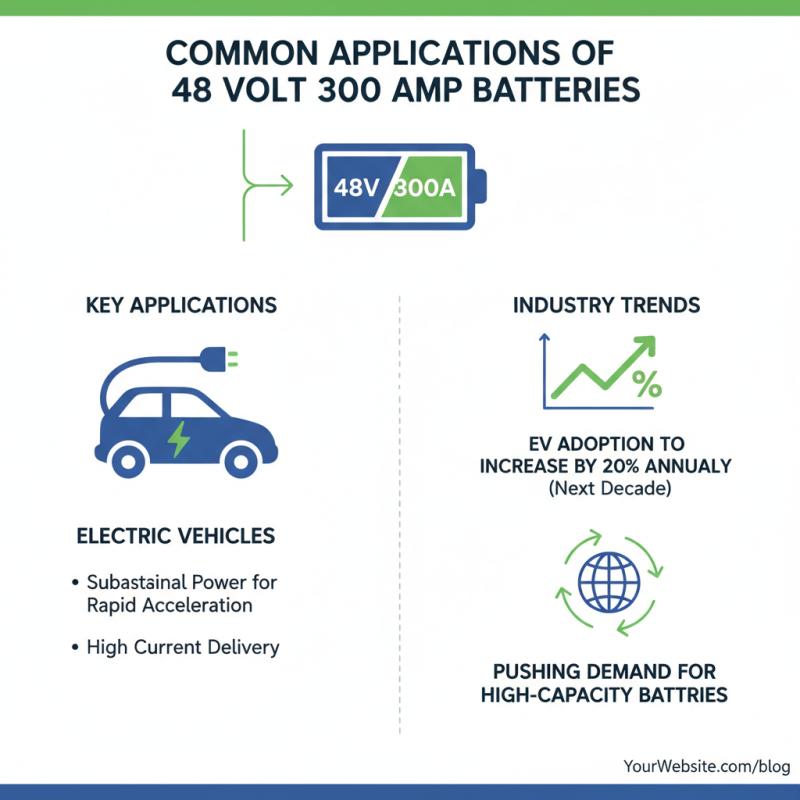
The 48 Volt 300 Amp battery is crucial in many sectors. Its substantial power capacity is particularly valuable in electric vehicles. These batteries can deliver high current, making them ideal for accelerating quickly. Reports estimate that the adoption of electric vehicles will increase by 20% annually over the next decade, pushing the demand for such batteries.
In renewable energy, these batteries store surplus energy generated by solar panels. A recent study found that integrating 48 Volt 300 Amp batteries can enhance system efficiency by up to 30%. This integration allows for smoother operation during peak demand. However, the cost of installation and maintenance can be a barrier for some.
In industrial applications, these batteries provide backup power for critical systems. Many manufacturers rely on them during outages. The advantage is clear, but they also pose challenges. Improper maintenance can lead to reduced performance and shorter lifespans. Thus, monitoring is crucial for maximizing their benefits.
Advantages of Using 48 Volt 300 Amp Batteries
A 48 Volt 300 Amp battery is a robust energy source. It provides substantial power for various applications. This type of battery is particularly popular in electric vehicles and renewable energy systems. Its design allows for efficient energy storage and reliable performance.
One key advantage of using 48 Volt 300 Amp batteries is their high capacity. They can deliver significant current to power demanding devices. This is crucial for electric trucks or larger boats. The battery's ability to handle high loads means fewer interruptions during operation. It can support long run times, which is often a priority.
However, there are some considerations. The weight of these batteries can be a challenge. Finding the right mount for applications is essential. Additionally, safety precautions are critical. Proper ventilation is necessary to avoid overheating. Users need to ensure they monitor charge levels regularly. Overall, while the benefits are substantial, careful management is crucial for optimal performance.
What is a 48 Volt 300 Amp Battery and Its Uses? - Advantages of Using 48 Volt 300 Amp Batteries
| Feature |
Details |
| Voltage |
48 Volts |
| Current |
300 Amps |
| Energy Capacity |
14.4 kWh |
| Applications |
Electric vehicles, solar energy systems, backup power systems |
| Advantages |
High capacity, efficient power delivery, increased energy density |
| Weight |
Approx. 200 lbs (90 kg) |
| Lifespan |
Up to 10 years with proper maintenance |
| Discharge Rate |
Can deliver high discharge rates for short durations |
| Charging Time |
Approximately 4 to 8 hours |
Considerations for Choosing and Maintaining 48 Volt 300 Amp Batteries
When considering a 48 Volt 300 Amp battery, several factors are crucial. First, the capacity is significant. These batteries often power systems requiring substantial energy, like electric vehicles or renewable energy setups. Ensure the voltage and ampere ratings suit your application. Misalignment can lead to inefficiencies.
Maintenance is another critical aspect. Regularly check the battery's state of charge. Ignoring this can lead to reduced performance. Keep the terminals clean to avoid corrosion. A simple cleaning can improve conductivity. However, it's easy to overlook this step.
Additionally, consider the environment in which the battery operates. Temperature fluctuations can impact performance. Too hot or too cold could shorten its lifespan. Proper ventilation is essential. Neglecting these details may result in premature battery failure or inefficiency.