How to Choose the Best 51.2vot 180amp Lithium Battery?
Choosing the right battery can be challenging. The 51.2vot 180amp Lithium battery stands out in many applications. It offers high energy density and impressive performance. However, not all batteries are created equal. Evaluating factors like durability, charge cycles, and temperature resilience is crucial.
When shopping for a 51.2vot 180amp Lithium battery, consider your specific needs. Do you require a lightweight option for portability? Or is a powerful version necessary for heavier machinery? Sometimes, what seems ideal may not fit your demands perfectly.
Research different brands and read customer reviews. Many buyers overlook this step. Brand reputation often reflects quality. Expert advice also adds value. Listening to seasoned users can guide your decision. In a market filled with options, a thoughtful approach is essential for finding the right battery.
Understanding the Basics of 51.2V 180A Lithium Batteries
When choosing a 51.2V 180A lithium battery, understanding its specifications is crucial. These batteries are often used in renewable energy systems and electric vehicles. Their high energy density allows for longer run times and less weight compared to lead-acid batteries. According to industry reports, lithium batteries typically have a cycle life of 2000 to 5000 cycles. This means they’re more cost-effective over time.
Safety is an essential factor. Lithium batteries can be sensitive to temperature and require proper management systems. Monitoring the battery’s state of charge is vital to prevent deep discharging. This helps maintain longevity and performance. Consider investing in a Battery Management System (BMS) that can safeguard your investment.
Tip: Always check the manufacturer’s specifications for capacity and discharge rates. Make sure the battery meets your power needs for reliable performance.
Another point to reflect on is the environmental impact. While lithium batteries are less toxic than traditional batteries, mining for lithium has raised sustainability concerns. It’s worth exploring recycling options. Look for providers who adhere to eco-friendly practices.
Tip: Research alternative battery technologies that may offer different advantages. Balance your needs with environmental responsibilities.
Key Specifications to Consider in Lithium Battery Selection
When selecting a 51.2V 180 amp lithium battery, understanding key specifications is crucial.
Capacity is a primary consideration. It indicates how much energy the battery can store.
A higher capacity offers longer usage times. However, it often comes with increased weight and cost.
Striking the right balance is essential.
Another vital specification is discharge rate. It defines how quickly a battery can release energy.
A higher discharge rate supports more demanding applications. For instance, if you plan to power heavy machinery,
a robust discharge rate is vital. Always check these numbers against your specific needs.
Runtime is equally important. It depends on both capacity and usage patterns.
If your device requires continuous power, the runtime can significantly impact efficiency. Remember, real-world conditions may differ.
Performance can vary based on temperature, usage, and age of the battery. Always consider these factors during selection.
Comparing Different Types of Lithium Battery Technologies
When selecting a 51.2V 180A lithium battery, understanding lithium battery technologies is crucial. There are different types available, each with unique features.
Lithium Iron Phosphate (LiFePO4) batteries offer high safety and long life cycles. They work well in stable environments but can be bulkier.
Another option is Lithium Nickel Manganese Cobalt (NMC) batteries. These provide a balance of energy density and power output. Their versatility makes them suitable for various applications. However, they can be more expensive than LiFePO4.
Choosing the right battery requires personal needs assessment. Consider weight, storage capacity, and usage frequency. Some users may prioritize cost-effectiveness over longevity. Others might focus on weight for mobility. Assessing your priorities early on can help you make informed decisions.
Evaluating Brand Reputation and Customer Reviews
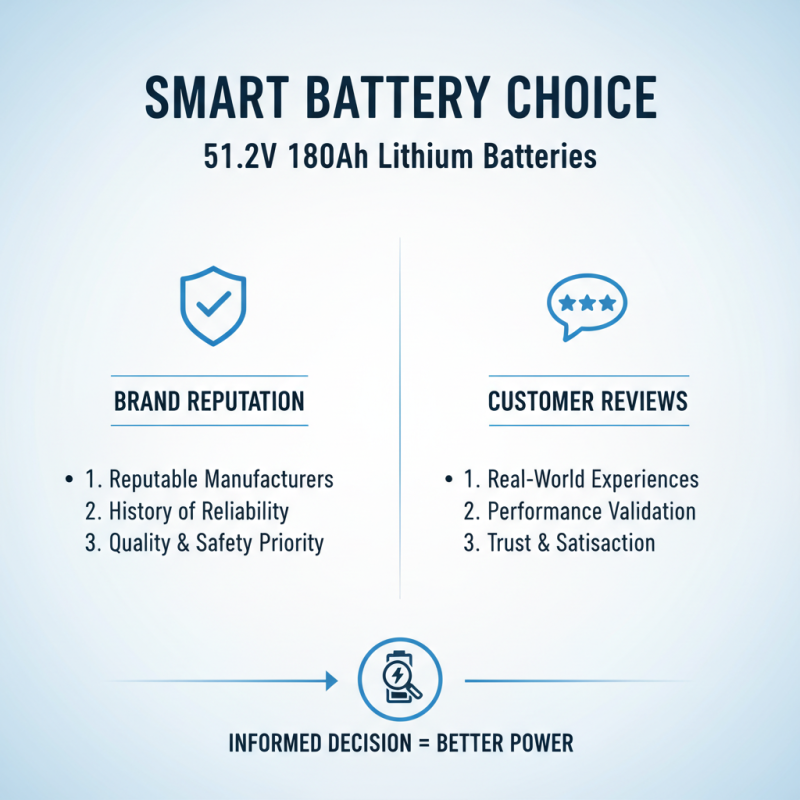
When selecting a 51.2v 180amp lithium battery, brand reputation and customer reviews play crucial roles. High-quality batteries are built by reputable manufacturers. These brands usually have a history of reliable performance and satisfied customers. Researching a manufacturer’s background can reveal whether they prioritize quality and safety in their products.
Customer reviews provide real-world insights. They highlight both strengths and weaknesses. Positive feedback often focuses on durability and performance. However, look for patterns in negative reviews too. Issues such as battery life and charging speed are common points of concern. Pay attention to comments about customer service. This feedback is essential, especially if issues arise after purchase.
Consider independent rating platforms for a broader perspective. Seeking out reviews from multiple sources gives a well-rounded view. Sometimes, a battery may seem ideal on paper but fall short in practical use. Reflect on the experiences shared by others. This can guide you to make a more informed choice, ensuring your selected battery meets your needs effectively.
Safety Features and Warranty Considerations for Lithium Batteries
When selecting a 51.2v 180amp lithium battery, safety should be a top priority. Lithium batteries can pose risks, including fires or explosions if not properly managed. Look for batteries with built-in safety features like overcharge protection, short-circuit prevention, and thermal management. These mechanisms can significantly reduce potential hazards.
Battery warranty is also critical. A robust warranty indicates confidence in the product's reliability. Typically, a warranty lasting five to ten years is a good sign. It shows the manufacturer stands behind their product. However, always review the warranty conditions. Know what it covers and any limits on claims.
Tips for choosing wisely: Inspect the battery for clear labeling of safety certifications. Be cautious of products that lack documentation. When in doubt, consult with experts. They can provide insights based on your specific needs and usage. Remember, proper maintenance extends the battery's lifespan. Regularly check for wear and tear, and ensure proper charging procedures are followed.
How to Choose the Best 51.2vot 180amp Lithium Battery? - Safety Features and Warranty Considerations for Lithium Batteries
| Feature |
Description |
Importance |
| Safety Features |
Overcharge protection, short circuit protection, thermal protection |
Critical for preventing battery failure and ensuring user safety |
| Cycle Life |
Number of charge/discharge cycles before capacity drops below 80% |
Affects longevity and overall cost-effectiveness |
| Warranty |
Duration of warranty and coverage details |
Indicates manufacturer confidence and support |
| Weight |
Total weight of the battery |
Impacts portability and application suitability |
| Temperature Range |
Operating temperature range |
Determines usability in varying environmental conditions |