Leave Your Message

How to Choose the Right 48 Volt 300 Amp Batteries for Your Power Needs

In today's energy-driven world, the demand for reliable power sources is at an all-time high. Among the various options available in the market, **48 Volt 300 Amp Batteries** stand out due to their capacity to deliver consistent and efficient power for numerous applications. According to the latest industry reports, including insights from the Energy Storage Association, the growth of the battery storage market has surged by nearly 50% year-over-year, highlighting the increasing reliance on advanced battery systems for both residential and commercial use.

Selecting the right battery is critical not only for performance but also for safety and longevity. The choice of **48 Volt 300 Amp Batteries** can significantly influence the efficiency of renewable energy systems, such as solar and wind power, as well as electric vehicle applications. Research indicates that properly matched batteries can enhance the overall system performance by up to 30%. Understanding metrics such as cycle life, discharge rate, and charging efficiency will empower consumers to make informed decisions that meet their specific power needs. As we delve deeper into this topic, we will outline the key considerations that should influence your selection process to ensure you choose the ideal battery solution for your energy requirements.

How to Choose the Right 48 Volt 300 Amp Batteries for Your Power Needs

Understanding the Basics of 48 Volt 300 Amp Battery Systems

When considering a 48 Volt 300 Amp battery system, it’s essential to grasp the fundamental characteristics that define these powerful energy systems. Typically utilized in renewable energy applications, such as solar energy storage and electric vehicles, these battery systems are designed to deliver significant power output while maintaining efficiency. A 48 Volt battery can provide a consistent and reliable energy source, and with a capacity of 300 Amp-hours, it can sustain operations for extended periods under load. Moreover, the architecture of these systems often supports parallel and series configurations, allowing users to customize their power supply according to specific demands.

According to a 2022 report by the Energy Storage Association, the global battery energy storage market is expected to grow at an annual rate of 30% through 2026, primarily driven by the increasing demand for renewable energy solutions. In practical terms, choosing the right 48 Volt 300 Amp battery involves evaluating factors such as cycle life, discharge rates, and temperature tolerance. High-quality systems can offer over 5,000 cycles at 80% depth of discharge, ensuring longevity and durability. Additionally, understanding voltage drop and ensuring proper wiring can optimize performance, which is critical in applications where efficiency translates directly into cost savings.

Key Factors for Assessing Your Power Needs and Battery Capacity

When selecting the right 48 Volt 300 Amp batteries for your power needs, it's essential to thoroughly assess your requirements. Start by understanding how much power your appliances consume. This includes evaluating wattage ratings and the duration of use for each device. Calculate your total energy needs by identifying the maximum power draw and the expected running time. This will give you an idea of the battery capacity needed to effectively support your system.

Tip: Consider a power management system to monitor usage patterns and adjust accordingly. This can help you optimize battery performance and ensure longevity.

Next, think about the conditions in which your batteries will be used. Factors like temperature, humidity, and physical space can influence battery efficiency and lifespan. Also, understand the discharge rate; some applications may require batteries that can handle high continuous loads, while others might prioritize longer cycle life over maximum output.

Tip: Always choose batteries that can operate optimally within your environmental conditions to avoid premature wear and tear. Regular maintenance checks can also help prolong battery life, ensuring you meet your power demands effectively.

Comparing Different Battery Technologies for Optimal Performance

When selecting a 48 Volt 300 Amp battery, understanding the various battery technologies available is essential for achieving optimal performance. Lead-acid batteries, for instance, offer affordability and robustness, making them a common choice for various power applications. They excel in providing high surge currents, which can be crucial for starting engines or powering heavy loads. However, their weight and the need for regular maintenance can be drawbacks, particularly in applications where space and weight are critical factors.

On the other hand, lithium-ion batteries have gained popularity due to their higher energy density and longer lifespan compared to traditional lead-acid options. These batteries are lighter and often come with built-in management systems to optimize performance and safety. They also have fast discharge rates, making them suitable for applications requiring immediate power. However, their initial higher cost can be a consideration for some users. By comparing these technologies, individuals can better determine which battery type aligns with their specific power needs and long-term goals, ensuring efficiency and reliability in their energy solutions.

Comparison of Different Battery Technologies for 48 Volt 300 Amp Batteries

Evaluating the Efficiency and Lifespan of 48 Volt Batteries

How to Choose the Right 48 Volt 300 Amp Batteries for Your Power Needs

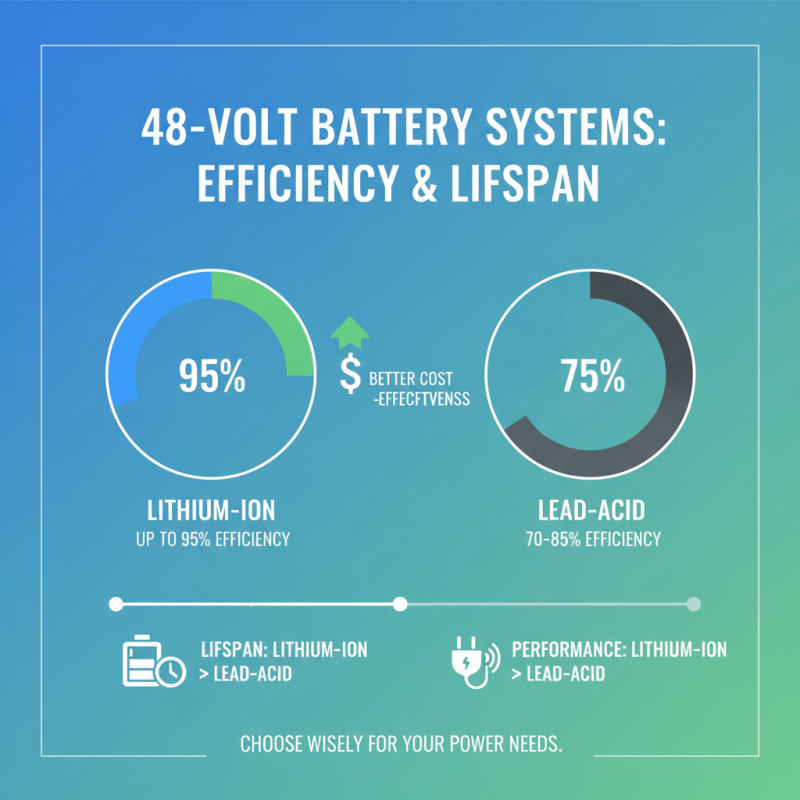
When selecting a 48 Volt battery system, understanding efficiency and lifespan is crucial for meeting your power needs. Efficiency refers to how well a battery converts stored energy into usable power. Reports indicate that high-quality lithium-ion batteries can achieve an energy efficiency rate of up to 95%, while lead-acid alternatives generally fall between 70-85%. This difference affects not only performance but also the cost-effectiveness of energy storage over time.

The lifespan of a battery is equally important. Many 48 Volt batteries come with varying cycle life ratings, often measured in total usable cycles before capacity significantly diminishes. Lithium-ion batteries typically offer between 2,000 and 5,000 cycles, while lead-acid batteries average around 500-1,000 cycles. This variance can greatly influence your long-term investment, as a longer lifespan translates to reduced replacement frequency and lower overall costs.

**Tips:** When evaluating battery options, consider the depth of discharge (DoD), as it influences both efficiency and lifespan. A lower DoD can prolong the life of your battery. Additionally, make sure to account for temperature conditions, as operating in extreme environments can negatively affect battery performance and longevity. Always check for warranty details that could provide insight into the manufacturer's confidence in their product's lifespan.

Essential Safety Considerations When Handling High-Capacity Batteries

How to Choose the Right 48 Volt 300 Amp Batteries for Your Power Needs

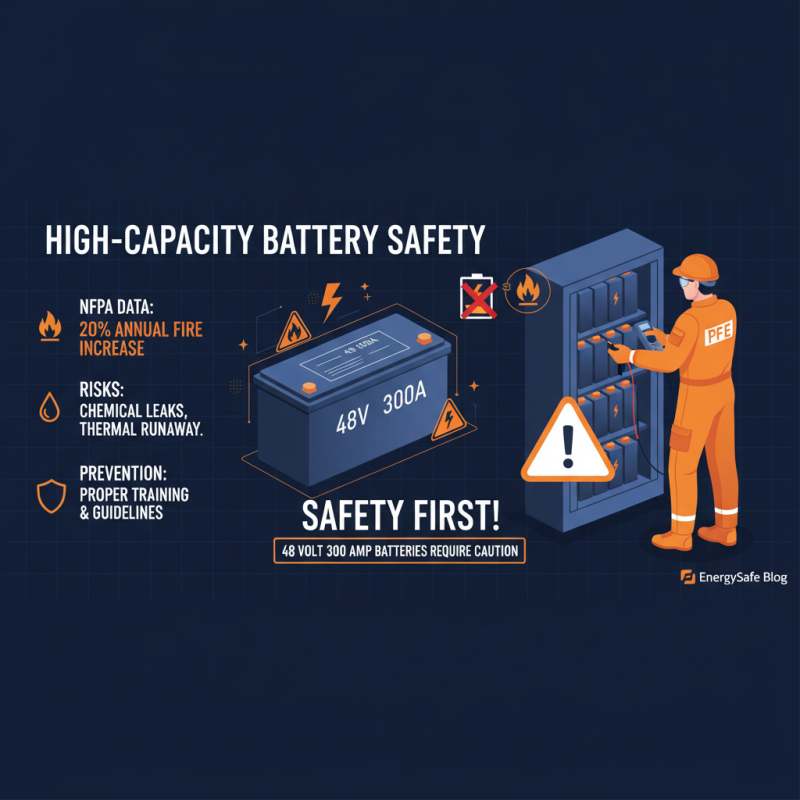
When dealing with high-capacity batteries such as the 48 Volt 300 Amp variety, safety must be the foremost consideration. According to the National Fire Protection Association (NFPA), lithium-ion battery incidents have increased dramatically, with data indicating that fires caused by battery failures will continue to rise by approximately 20% annually. Handling these batteries requires proper training and adherence to safety guidelines to prevent accidents related to chemical leaks or thermal runaway.

Proper safety gear is essential when handling these batteries, including gloves and safety eyewear to protect against potential acid spills and electrical hazards. Furthermore, maintaining an adequate ventilation system during charging is crucial to avoid the accumulation of explosive gases, which can occur in confined spaces. The Occupational Safety and Health Administration (OSHA) emphasizes the importance of understanding the risks associated with handling large-capacity batteries, recommending that all personnel undergo rigorous training on handling procedures and emergency response. Adopting stringent safety practices, such as regular inspections and using appropriate protective equipment, can significantly mitigate the risks associated with high-capacity battery operation.