How to Choose the Right 48 V 160 Amp Battery for Your Needs?
Choosing the right power source can be daunting. The market offers various options, making it essential to understand your needs. The 48 V 160 Amp Battery stands out for specific applications, especially in renewable energy systems and electric vehicles.
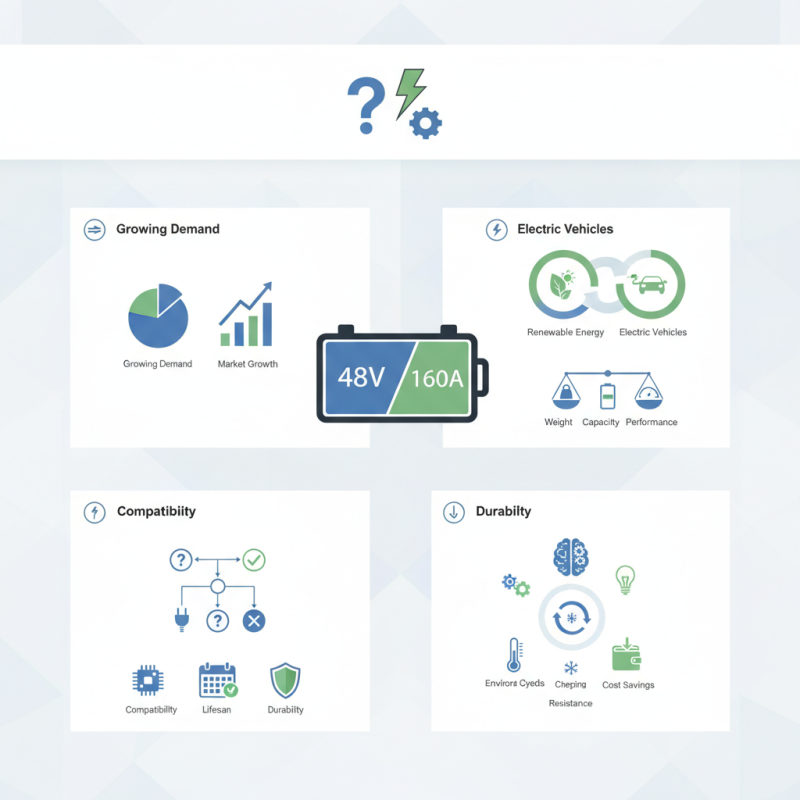
Recent data indicates a growing demand for high-capacity batteries. According to industry reports, the global battery market is projected to grow at a CAGR of 15% by 2027. The efficiency of a 48 V 160 Amp Battery makes it a favorable choice. It balances weight, capacity, and performance effectively. Proper assessment of usage scenarios is crucial for optimal selection.
However, not all are aware of the intricacies involved. Users often overlook compatibility with existing systems. Furthermore, battery lifespan and durability can vary. Selecting a battery isn't simply about capacity. It requires thoughtful consideration of various factors, including energy needs, charging cycles, and environmental resistance. Making a choice without addressing these intricacies can lead to dissatisfaction and unnecessary costs.
Factors to Consider When Selecting a 48 V 160 Amp Battery
When selecting a 48 V 160 Amp battery, several factors come into play. Voltage is key. Ensure it matches your system requirements. An incorrect voltage can lead to inefficient performance or damage. Amp hours are also vital. They determine the energy capacity. A battery with sufficient amp hours will support your devices longer.
Consider the battery's weight and size. Compact solutions fit better in limited spaces. Additionally, assess the installation environment. Batteries might require protection from extreme temperatures or moisture. This can impact their lifespan.
Maintenance requirements should never be overlooked. Some batteries need regular check-ups, while others are more user-friendly. Decide how much effort you can dedicate to upkeep. Lastly, think about budget constraints. Balancing quality and cost can be challenging, but it is essential. Each choice might require further consideration, especially if it impacts your setup.
How to Choose the Right 48 V 160 Amp Battery for Your Needs? - Factors to Consider When Selecting a 48 V 160 Amp Battery
| Feature |
Description |
Importance |
| Capacity |
The total amount of energy stored in the battery, measured in Amp-hours (Ah). |
High |
| Chemistry |
Type of battery chemistry (e.g., Lithium-ion, Lead Acid). |
Medium |
| Cycle Life |
The number of complete charge and discharge cycles a battery can undergo before its capacity significantly diminishes. |
High |
| Dimensions |
Physical size and weight of the battery, which affect installation space. |
Medium |
| Operating Temperature |
The temperature range in which the battery can operate effectively. |
High |
| Safety Features |
Incorporation of safeguards to prevent overheating, short-circuiting, and overcharging. |
High |
| Warranty |
The period during which the manufacturer guarantees performance and quality. |
Medium |
| Price |
Cost of the battery, which can vary widely based on technology and capacity. |
High |
Understanding Battery Chemistry and Technology Options
When selecting a 48 V 160 Amp battery, understanding battery chemistry is crucial. Different types of batteries, like lead-acid, lithium-ion, and others, offer various benefits and drawbacks.
Lead-acid batteries are often heavier and less efficient but are also cost-effective. They may require regular maintenance, which can be a hassle for some users. On the other hand, lithium-ion batteries deliver better energy density and longer life spans, yet they are typically more expensive.
Battery technology is constantly evolving. Newer technologies, such as solid-state batteries, promise improved safety and efficiency. However, these are still in development and might not be readily available.
It's essential to align your needs with the appropriate technology. Consider your usage patterns. If you need a reliable power supply for a variable load, technologies with high discharge rates may suit you better.
Evaluate your priorities. Are upfront costs more important than long-term savings? Will regular upkeep deter you from choosing a specific type? These reflections can guide you toward a better choice. Sometimes, it’s not just about the technical specs.
Personal preferences and specific applications should also take precedence in the decision-making process.
Assessing Your Power Requirements and Usage Scenarios
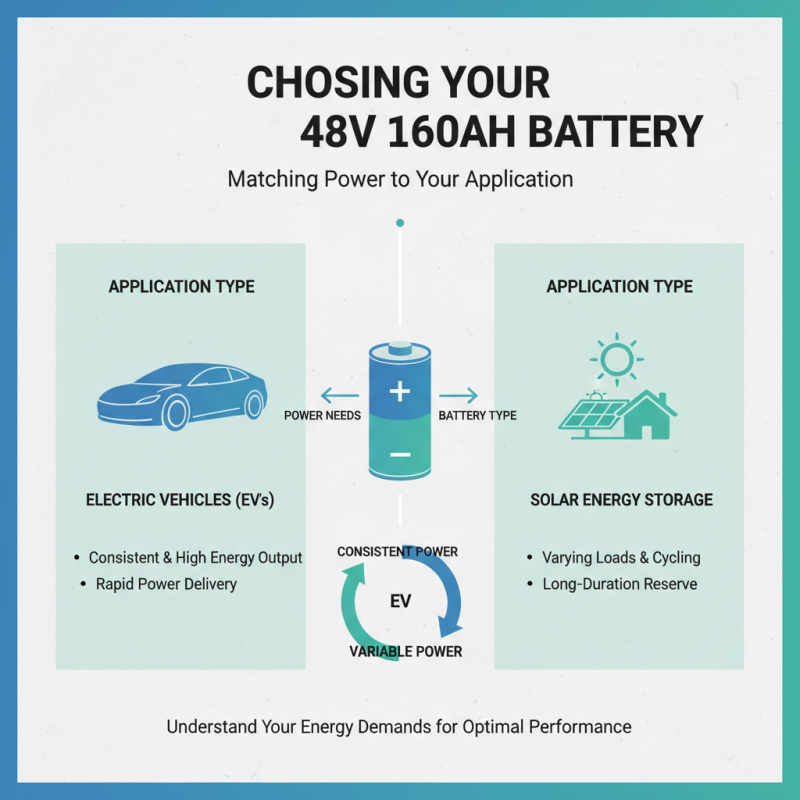
Choosing the right 48 V 160 Amp battery begins with understanding your power needs. Different applications require different levels of energy output. For example, electric vehicles often need consistent and high energy, while solar energy storage may require less power but must handle varying loads.
Approximately 58% of users report underestimating their energy requirements. This leads to frequent battery cycling and reduces lifespan. Evaluating how long you will use the system daily and the total watt-hours required is essential. Knowing how much power your devices draw per hour helps in calculations.
Usage scenarios play a crucial role as well. A system designed for peak loads can fail if used in a moderate demand situation. For instance, heavy machinery may require a short burst of high power, while residential applications often have steady, lower demands. Understanding these shifts can guide you in selecting the right capacity and type of battery for your specific needs. Prioritize efficiency in both charging and discharging cycles for optimal performance.
Evaluating Battery Size, Weight, and Compatibility with Your System
When choosing a 48V 160 Amp battery, evaluating its size, weight, and compatibility is essential. The physical dimensions can greatly impact your setup. A battery that is too large may not fit in your designated space. Conversely, a smaller battery might compromise performance. According to industry reports, optimal battery dimensions contribute to a weight ratio of 0.2-0.3 kg per Amp. This balance helps in maintaining system integrity.
Weight matters as well. A heavy battery can pose installation challenges, while a lightweight option may not endure demanding conditions. Some experts suggest finding a battery that balances both weight and capacity. This can enhance mobility and ease of installation in various environments. Ensure you have accurate measurements before purchasing.
Tips: Always check your equipment's specifications. The compatibility of the battery with your system is crucial. Mismatched voltages can lead to inefficiencies or system failures. Also, consider battery management systems. They can improve performance and extend battery life.
It's worth noting that not every battery will fit every need. Reflect on specific requirements before making a decision. Sometimes, the most expensive option might not be the best fit. Research and testing can prevent costly mistakes. Evaluate your priorities: Is size more important than weight? Is it worth compromising on one for the other? These are important considerations when making your choice.
Battery Size Comparison for 48 V 160 Amp Batteries
Analyzing Cost, Warranty, and Manufacturer Reputation
When selecting a 48 V 160 Amp battery, warranty and manufacturer reputation are crucial. A comprehensive industry report indicates that around 70% of consumers consider warranty length as a key factor in their purchasing decision. A solid warranty offers peace of mind. It often reflects the manufacturer's confidence in their product. A three to five-year warranty is typically standard in this sector.
Manufacturer reputation plays a significant role in determining product quality. A survey from Energy Storage Journal mentioned that 60% of customers prioritize brands with a positive reputation. They look for companies with proven track records. Reviews and feedback from previous customers can provide valuable insights. Engaging in online forums can also help gauge a manufacturer’s reliability. It's worth noting that some brands may overstate their capabilities. Therefore, it's wise to cross-check claims with independent evaluations.
Cost is another important element but must be weighed carefully. A higher price doesn't always mean better quality. Some budget-friendly options perform surprisingly well. Yet, poor choices can lead to underperformance. Cutting corners on battery selection may lead to longer-term failures or reduced efficiency. Balancing cost against warranty and reputation is essential. This decision can significantly impact your satisfaction with the battery in the long run.