China Top 48V 300Ah LiFePO4 Battery Supplier?
Finding a reliable China-based supplier is central to choosing a safe, durable 48V 300Ah LiFePO4 battery. China has extensive experience in lithium battery manufacturing, but product quality differs widely between factories. A polished website is not proof. This guide examines suppliers through engineering evidence, production capability, testing records, and customer support. It also addresses the search phrase “48 Vot 300 Amp Lithium Lfp,” which may contain a typing error but reflects strong buyer interest. Real purchasing decisions require more than price comparisons. They require clear specifications, traceable materials, and honest communication.
A credible supplier should explain cell grade, battery management system functions, operating temperature, enclosure protection, and expected cycle performance. Factory audits can reveal practical details, including clean assembly areas, automated welding equipment, and battery testing stations. Certifications should be verified against the actual model, not copied from another product. Ask for test reports, warranty terms, installation guidance, and shipping documentation. Important details often hide in the fine print. A responsible supplier will discuss charging limits, storage conditions, and compatibility with inverters. No supplier is perfect for every project. That is worth remembering. Some published cycle-life figures also depend on temperature, discharge depth, and maintenance. Therefore, this introduction focuses on balanced evaluation rather than exaggerated claims, helping buyers compare China’s leading 48V 300Ah LiFePO4 battery suppliers with greater confidence.
What Is a 48V 300Ah LiFePO4 Battery?
What Is a 48V 300Ah LiFePO4 Battery?
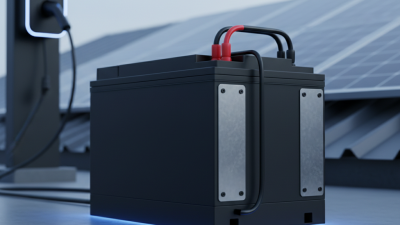
A 48V 300Ah LiFePO4 battery stores substantial energy for solar storage, backup power, and low-speed electric equipment. In practice, “48V” usually means a 16-cell pack with a 51.2V nominal voltage.
Its calculated energy is 15.36 kWh, using 51.2V × 300Ah.
The usable figure is lower. Inverter limits, temperature, and battery protection settings reduce available output.
LiFePO4 chemistry offers strong thermal stability and a long service life when correctly managed. The International Energy Agency’s Global EV Outlook 2024 reported that LFP batteries represented about 40% of global electric-car battery demand in 2023. That market shift reflects cost and durability advantages, not unlimited performance.
A 300Ah pack can theoretically deliver 300A for one hour at a 1C rate, but the BMS may permit less continuous current. Check the rated discharge current carefully.
A competent supplier should provide cycle-test conditions, cell configuration, operating temperature, communication options, and compliance evidence for IEC 62619 and UN 38.3.
Real installations still need ventilation planning, correct cable sizing, and professional commissioning. Specifications can look impressive. Field conditions are less tidy.
Key Specifications and Performance Characteristics
China Top 48V 300Ah LiFePO4 Battery Supplier?
A 48V 300Ah LiFePO4 battery usually provides a nominal 15.36 kWh capacity. Its actual usable energy depends on the battery management system, discharge limit, temperature, and inverter efficiency. A reliable supplier should state these conditions clearly, not only advertise the rated figure.
The battery should include cell balancing, overcharge protection, over-discharge protection, short-circuit protection, and temperature monitoring. Continuous current ratings matter more than impressive peak values.
For example, a 150A continuous output can support many off-grid and backup systems, but cable size and ventilation still require careful design. Communication through CAN or RS485 can improve inverter coordination.
That matters.
In practical installations, LiFePO4 chemistry offers stable performance and a long service life under controlled charging. Many manufacturers quote thousands of cycles, yet the result changes with depth of discharge, heat, storage time, and maintenance.
A serious supplier should provide cell test records, production traceability, safety test documentation, and clear warranty conditions. Ask whether capacity testing occurs on every finished unit or only on samples.
The difference is important.
IP protection, enclosure strength, terminal quality, and low-temperature charging control also deserve inspection. A small weakness there can become a costly field problem.
These specifications are easy to list, but verifying them requires real test data and honest communication.
How to Evaluate Chinese Battery Suppliers
China Top 48V 300Ah LiFePO4 Battery Supplier?
Evaluating a Chinese battery supplier requires more than comparing prices. Ask for cell specifications, production records, and recent capacity test reports. A reliable supplier should explain cycle life under stated temperature, charge rate, and discharge conditions. Request a sample unit before placing a large order. Check its weight, terminal design, BMS settings, and performance under continuous load. Small details matter.
Tips: Visit the factory, or arrange a live video audit. Confirm whether testing is done in-house or by an independent laboratory. Review quality certificates, transport documents, warranty terms, and service response times. Verify compliance with applicable safety and shipping requirements, such as UN 38.3 and relevant regional standards. Do not accept vague claims like “automotive-grade” without written evidence.
Supplier experience is also visible in communication. Can the engineering team answer questions about low-temperature charging, balancing, and inverter compatibility? Can they provide traceable batch numbers? A polished website can still hide weak process control. I once considered a low-cost quotation that excluded testing and after-sales support. The final price looked attractive, but the risk was not. I would now compare total ownership cost, not only the battery invoice. Even careful buyers can miss hidden assumptions. Check every figure.
How to Evaluate a Chinese 48V 300Ah LiFePO4 Battery Supplier
A 48V 300Ah LiFePO4 battery normally uses a 51.2V nominal configuration with 16 cells in series and stores approximately 15.36kWh. Use the current profile below to compare a supplier’s cell, BMS, busbar, fuse, connector, and test-report claims.
The values are calculated from a 300Ah nominal capacity: current = C-rate × 300Ah. Before purchasing, verify that the quoted continuous and peak currents are supported by the BMS and cells, and request traceable evidence such as a datasheet, capacity test record, UN 38.3 transport test, IEC 62619 safety test, warranty terms, and production traceability. Actual limits depend on cell chemistry, temperature, wiring, and BMS settings.
Manufacturing Standards, Safety, and Quality Control
China Top 48V 300Ah LiFePO4 Battery Supplier?
A reliable supplier begins with controlled manufacturing, not attractive specifications. A 48V 300Ah LiFePO4 battery stores about 15.36 kWh at nominal voltage. Each cell should be traceable by batch, chemistry, and test record. Production audits should review electrode coating, moisture control, welding strength, and insulation distance. These details decide whether a battery performs safely after years of cycling.
International testing gives useful context. The IEA reported that global battery demand exceeded 750 GWh in 2023, showing the scale of quality challenges. IEC 62619 supports industrial lithium battery safety testing, while UN 38.3 covers transport-related testing. For stationary systems, buyers should also examine protection against overcharge, short circuit, overheating, and abnormal temperature rise. A capable factory uses automated voltage checks, capacity testing, BMS calibration, and sample-based aging tests. Yet sampling alone can miss defects. That point deserves more attention.
Tips: Request a complete quality file before ordering. Check cell certificates, BMS test results, cycle-life conditions, IP ratings, and warranty terms. Ask how rejected cells are isolated. Also inspect whether final testing covers every assembled battery, rather than only selected units.
Field experience suggests that cycle-life claims need careful reading. A reported 6,000 cycles may depend on moderate temperature, limited depth of discharge, and controlled charging. Real installations are less forgiving. Supplier evaluation should include factory video evidence, independent inspection, and records from comparable 48V systems. Reliability is built in small steps, and sometimes those steps are overlooked.